
Citations
Characterization of the Essential Oils of the Pinus oocarpa by Gas Chromatography-Mass Spectrometry (Gc-Ms) Essential Oils by Gc-Ms
Caracterización de los Aceites Esenciales del Pinus oocarpa por Cromatografia de Gases-Espectrometría De Masas (Gc-Ms) Aceites Esenciales by Gc-Ms
Open | Download
Issue
Section
Articles
How to Cite
Characterization of the Essential Oils of the Pinus oocarpa by Gas Chromatography-Mass Spectrometry (Gc-Ms) Essential Oils by Gc-Ms . (2021). Revista EIA, 18(35), 35016 pp. 1-11. https://doi.org/10.24050/reia.v18i35.1341
Dimensions




license

This work is licensed under a Creative Commons Attribution-NonCommercial-NoDerivatives 4.0 International License.
Copyright statement
The authors exclusively assign to the Universidad EIA, with the power to assign to third parties, all the exploitation rights that derive from the works that are accepted for publication in the Revista EIA, as well as in any product derived from it and, in in particular, those of reproduction, distribution, public communication (including interactive making available) and transformation (including adaptation, modification and, where appropriate, translation), for all types of exploitation (by way of example and not limitation : in paper, electronic, online, computer or audiovisual format, as well as in any other format, even for promotional or advertising purposes and / or for the production of derivative products), for a worldwide territorial scope and for the entire duration of the rights provided for in the current published text of the Intellectual Property Law. This assignment will be made by the authors without the right to any type of remuneration or compensation.
Consequently, the author may not publish or disseminate the works that are selected for publication in the Revista EIA, neither totally nor partially, nor authorize their publication to third parties, without the prior express authorization, requested and granted in writing, from the Univeridad EIA.
Show authors biography



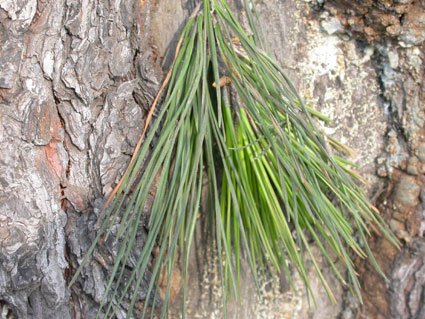
In the department of Cauca there are more than 1400 hectares of pine forests, cultivated for wood purposes. The species Pinus oocarpa among others is one of the most cultivated conifers, its foliage contains a certain amount of essential oils, which are used in the cosmetic and pharmaceutical industry mainly. The extraction of these oils is done by dragging them with water vapor in order to obtain the most volatile fractions. In this work, the extraction of the essential oil from the foliage of Pinus Oocarpa was carried out using water vapor drag. For the characterization of the oil, spectroscopic and physicochemical tests were carried out, such as density, refractive index, solubility and boiling point in order to determine and establish the characteristics of the essential oil obtained. Gas chromatography with an FID detector was used to determine the α-pinene retention time and finally the analyte quantification (3.5%). Mass spectrometry confirmed the presence of α-pinene in the essential oil and identified other compounds present.
Article visits 1492 | PDF visits 1094
Downloads
Download data is not yet available.
- Berrio, J. 1992. Los pinos y la reforestación en Colombia, Revista. Bosques y Futuro. 8-10.
- Calderón, C.E. 1985. Manual para la interpretación de espectros de infrarrojos. Universidad Nacional de Colombia. Bogotá D. C.
- Dominguez, X. 1973. Métodos de Investigación Fitoquimica, 1er Ed. Limusa. México. Pág. 231.
- Gallo-Corredor, J.A; Sarria-Villa, R.A; Palta, J.C. 2012. Comparación de la Producción resinera de dos especies de pino cultivadas en el municipio de Cajibío, Departamento del Cauca, Colombia. Journal de Ciencia e Ingeniería 4 (1), 37-42. Disponible en: https://jci.uniautonoma.edu.co/2012/2012-6.pdf. Consultada: 05/05/2019.
- Gallo-Corredor, J.A, Sarria-Villa, R.A; Moreno, P.A. 2015. Caracterización del follaje de Pinus patula como materia prima para la extracción de aceites esenciales. Journal de Ciencia e Ingeniería 7 (1), 54-58. Disponible en: https://jci.uniautonoma.edu.co/2015/2015-8.pdf. Consultada: 05/06/2019.
- Martinez, A. 2003. Aceites Esenciales. Facultad de Química Farmacéutica, Universidad de Antioquia. Medellín. Disponible en: http://www.med-informatica.com/OBSERVAMED/Descripciones/AceitesEsencialesUdeA_esencias2001b.pdf. Consultada: 08/06/2019.
- Moshonas, M.G. y Luna, E.D. 1970. The Flavor Industry, Haylen & Son. 90-94.
- Quert, A.R; Martínez, J; Galabert, F. 2000. Contenido del aceite esencial en el follaje de Pinus Caribea Morelet en función de la edad del árbol. Universidad de la Habana, Revista Cubana de Farmacia. 34(2). 125-128. Disponible en: http://scielo.sld.cu/pdf/far/v34n2/far07200.pdf. Consultada: 12/01/2019.
- Skoog, D. Holler, J y Nieman, T. 2001. Principios de análisis instrumental. 5ta Ed. Mac Graw Hill, Madrid. p 777.
- Teophile, K. 1997. Bosques y empleos, Arista inexplorada, Revista Bosques y Futuro. p 12.
- Xiao, Z; Niu, Y; Wu, M; Liu, J; Ma, S. 2016. Characterization of odor-active compounds of various Chrysanthemum essential oils by gas chromatography–olfactometry, gas chromatography–mass spectrometry and their correlation with sensory attributes. Journal of Chromatography B. 152–162. doi: 10.1016/j.jchromb.2015.12.029.
- Xiao, Z, Chen, J, Niu, Y; Chen, F. 2017. Characterization of the key odorants of fennel essential oils of different regions using GC–MS and GC–O combined with partial least squares regression. Journal of Chromatography B. 226–234. doi: 10.1016/j.jchromb.2017.07.053.